|
|
|
|
Tell-A-Friend
EAST OF
BRITTANY
part
III:
By far the largest number of prehistoric tombs in France is scattered across the limestone plateaux to the south and west of the Massif Central: the area of the
causses
.
The limestone
départements
of Lot, Aveyron, Gard, Hérault and Lozère contain over 2000 megalithic tombs of all sizes -
mostly
dolmens simples
with a few megalithic cists
(coffres)
, and tombs which are morphologically between
dolmen simple
and
allée-couverte.
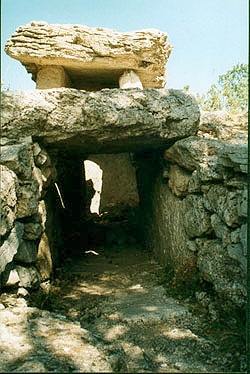
Ferrussac (Hérault)
Few are as elegant and impressive as this one.
And not many are as poetic as the handful of related wedge-tombs to be found on Ireland's tiny
causse
known as the Burren.
Many have been damaged or pillaged.
I was told that during the Second World War the Resistance
maquisards
whiled away the long days excavating for hidden treasure as their ancestors had done right back to the time that the tombs were built. Others have found themselves too close to 'progress'.
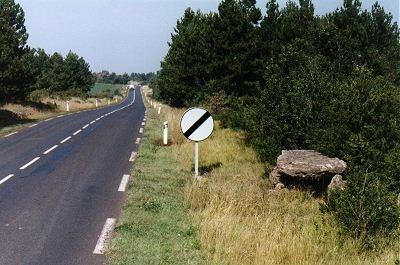
Azinières (Aveyron)
But many also have been preserved as overnight shelters for shepherds. They have made some tombs more weatherproof, and beside them can be seen the circles of their fires.
A few have been partially-reconstructed with the aid of concrete.

 Vaour (Tarn)
Detail of underside of broken, re-erected capstone


Pathetically few of these tombs are marked on Michelin maps.
A small percentage are roughly indicated on the IGN (Ordnance Survey) 1:100,000
Série Verte
maps. Almost all are marked on the IGN 1:25,000 (1 cm = 250 metres)
S
é
rie Bleue
- but only the dedicated dolmen hunter will go to this expense
.
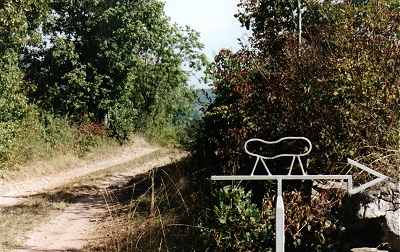
However, local enthusiasts and tourist centres have, somewhat belatedly, recognised that megalithic tombs are of interest to outsiders, and they have put up handsome little signs. On the Causse de S é v é rac, west of S é v é rac-le-Château near the source of the river Aveyron, wrought-iron signs will lead the curious to the most accessible dolmens, and the tourist office publishes an illustrated brochure with a map.
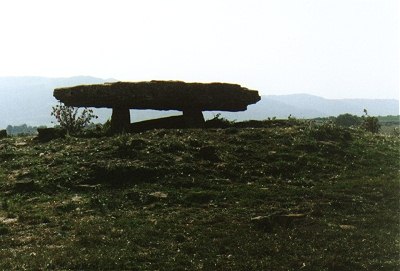
La Vernhiette on the Causse de S é v é rac (Aveyron)
This well-known tomb with a chunk of its capstone (and its end-stones) missing is known also by Occitanian name
Lou Ciborni
é
: 'The Dolmen'.
It can be seen clearly from a local road, and from afar by those with keen eyesight.
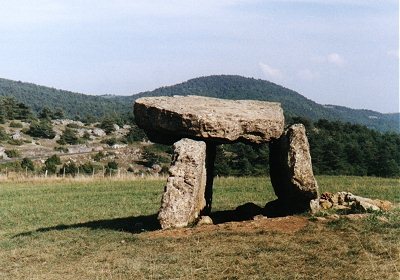
The low-flying aeroplane indicates how the tomb fits into the modern landscape.

Dolmen de la Galitorte
, Buzeins (Aveyron)
Some of these
dolmens simples
are quite low, their single roof-slab fragile and often damaged -nothing like as impressive or robust as the
allées-couvertes
which survive farther north, especially in the valleys of the Seine and the Loire. Some retain a good part of the tumulus in which they were embedded.

Concoules IV, Montjaux (Aveyron)
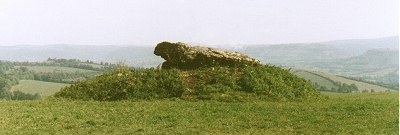
Buzareingues I, Buzeins (Aveyron)
Occasionally a tomb will be graced by a roof-slab of character.

Dolmen de Jonquayrolles , Montjaux (Aveyron)
Since all the stones used to construct these tombs are limestone slabs, sidestones sometimes lean and lurch attractively...
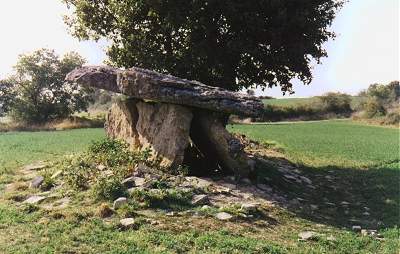
Dolmen de Restous , Buzeins (Aveyron)
...or have collapsed.
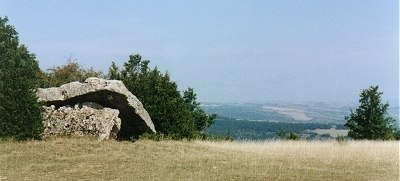
Dolmen de la Gl è ne , Saint-L é on (Aveyron)
Farther west, on the
causses
of the Lot, the dolmens have a neater character - due probably to the different nature of the limestone - and they more resemble Irish tombs in the Burren.

Four è s, Limogne (Lot)
Some recall the epithet "griddle" often used in the names of Irish prehistoric tombs
.
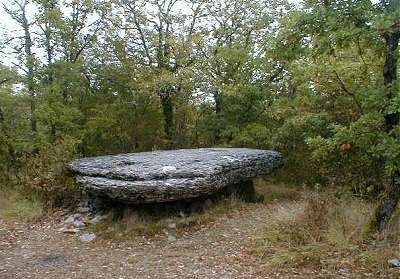
Vidaillac (Lot)
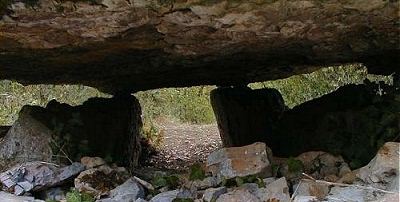
Others seem at first glance more like Irish portal -tombs than the later wedge -tombs to which they are morphologically related.
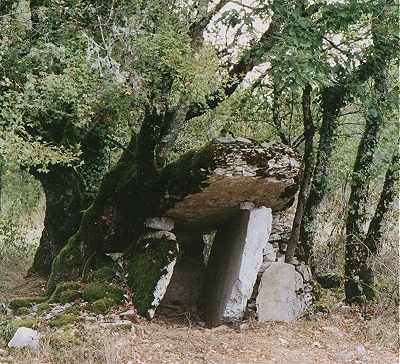
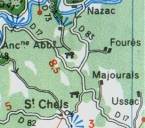
Majourals, Saint-Chels (Lot)

Dolmen de Saint-Paul, Verdier (Tarn)

Dolmen du Lac d'Auri é , Limogne (Lot)
High up on the vista-rich watershed between the beautiful rivers Lot and C é l é , a rough-hewn monolithic limestone cross stands a few metres from a dolmen on the Pilgrim Road from Figeac and the shrines of Western Auvergne to Santiago de Compostela. This is one of the most poetic dolmens of France.

Dolmen du Mas de P
é
gouries
, Gr
é
alou (Lot)

|
Some approximate dolmen and menhir statistics
Hérault
: 550 dolmens, 150 menhirs
Dating from
: 3500 to 2500 BCE
(with frequent later re-use)
|
Sévérac I (Aveyron)
 go back to part two
|
'Statues, menhirs et dolmens des
|
