
|
rejoice in the dog
BETWEEN POETRY AND PROSE
PROSE
this sorry scheme of things
|

|
|
SATAN IN THE GROIN
_________
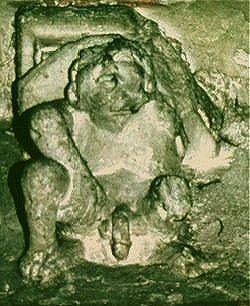
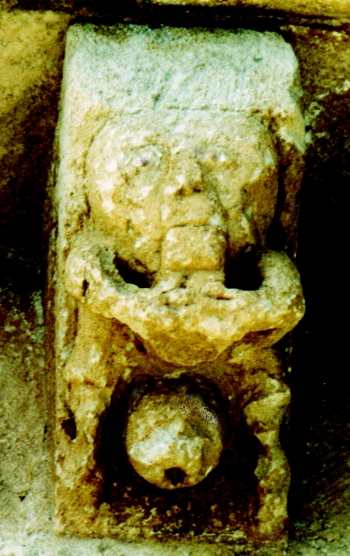
Interior corbel,
church of Sainte-Radegonde, Poitiers (Vienne), France
|

|
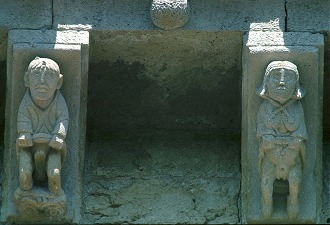
The Wealthy Man clutching and weighed down by his moneybag on the right-hand side of the church-doorway at Jazeneuil (Vienne), France.
Skilled sculptors and masons could move from a contract on the shores of the Mediterranean to another on the shores of the Baltic within a fortnight, bringing new motifs and improved techniques with them. This energy reflected, and further contributed to, an economic boom that led to the rise of cities, the export of criminals on Crusades, and the decline of the monasteries which had generated wealth by their greatly-increased land-cultivation and output.
Interior corbel, Poitiers Cathedral, France
Saint-Contest (Calvados), France
Tuscania (Viterbo), Italy |


|
Béceleuf (Deux-Sèvres), France Guzzlers of wine from barrels, acrobats and musicians (for in the 12th century no instrumental music could be 'sacred') rub shoulders with beasts such as pigs and dogs and bears who, even when not ithyphallic, represent lusts and degradation.
Annaghdown (Galway), Ireland
Apes, coming from Barbary, represented the barbaric and blaspheming (if not demonic) Moors, and, to emphasise the point, displayed their circumcisions.
Droiturier (Allier), France
Champagnolles (Charente-Maritime), France
Absidal corbel, Graimbouville (Seine-Maritime), France
Megaphallic glutton, Barahona (Segovia), Spain
Saint-Contest (Calvados), France
San Pedro de Tejada (Burgos), Spain Damnation was vividly represented, most frequently by monsters grabbing or swallowing human figures (often naked) - representing Satan's Realm claiming and swallowing up the souls of sinners.
Maillezais (Vendée), France
Puypéroux (Charente), France The sin of Luxuria (the depravity of the rich) was typically punished by Hellish snakes or toads attacking the breasts of long-tressed naked women, while Concupiscentia (lust) in men was punished by serpents biting their balls or beards or moustaches. Mauling by huge demonic beasts was also a common symbol of the fate of sinners. The blowing of horns into the ears of the damned suggests the Last Judgement.
Passirac (Charente), France For hundreds of years neither sex nor marriage were endorsed by the Western Church. St Augustine had said that the only sex that was not a passage to Hell was the carnal union of two Saved Souls for the sole purpose of creating another soul to be saved. Thus most marriages were considered to be at least potentially sinful (unlike sacred marriages between holy men), and it was not until the the Fourth Lateran Council of 1215 that the Church declared marriage to be a sacrament - with a prescribed ritual - and ensured its eventual demise by espousing the 'family values' so despised by the first Christians.
Saint-Front-sur-Nizonne (Dordogne), France
|

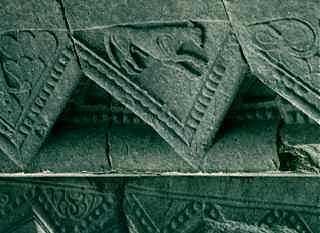

 Mauriac (Cantal), France: absidiole corbels







Female exhibitionists have been illustrated in various books, notably in
Images of Lust
*
by Anthony Weir and James Jerman,

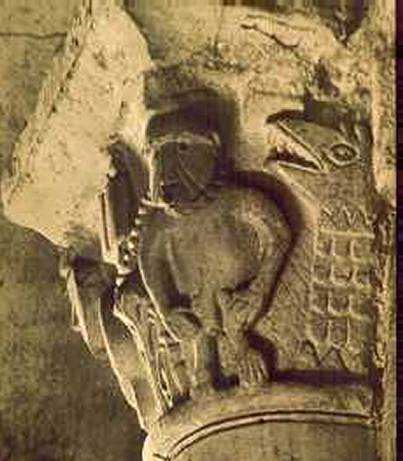
Solignac (Haute-Vienne), France
but few people are aware that there are at least as many
male
exhibitionist carvings on churches across the length and breadth of Europe - from Bohemia to Galicia, and Denmark to Sicily - an enticing selection of which are illustrated here.
They appear also on castles and even stranger places in Britain and Ireland.

Post-mediæval gate-pillar, Ballycloghduff (Westmeath), Ireland
The pictures above are taken from a Book in Progress ( 'The Silent Orgy ') which has not so far found a publisher with the means to print and distribute it.
*
Images of Lust,
by Anthony Weir and James Jerman, was published by Batsford (London) in 1986, and re-issued as a paperback in 1994. It was re-published in paperback by Routledge (London) in 1999, and is due to come out in the United States this year.
|
|

This web-page is dedicated to the late Martha Weir,
who was amazed but unfazed by these carvings,
and without whom
"Images of Lust"
and "
The Silent Orgy
"
would never have been researched or written.

|
Click here for a related essay:
|