


|
AND CROSS-SLABS part three
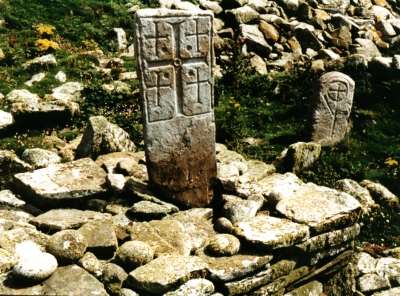
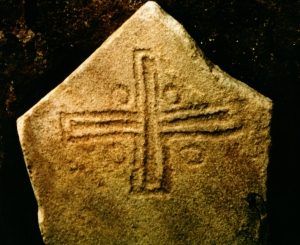
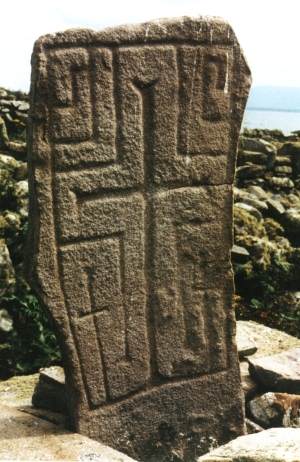
On the island of Inishmurray, off the coast of Sligo, many cross-slabs and pillars survive, as well as ruined churches and monks' cells (known as clocháns ). Some slabs and pillars have been set up on leachta , others stand or lie about.
It is not surprising in such a well-preserved island environment as Inishmurray to find smooth oval, magic, holy or cure stones
(discussed in part two)
- here decorated by engraving - placed on top of a
leacht..
.
..
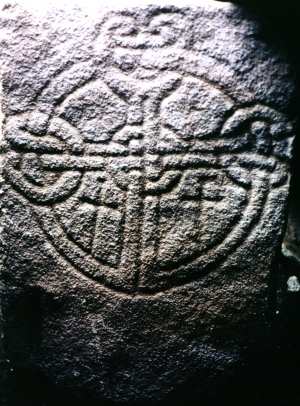
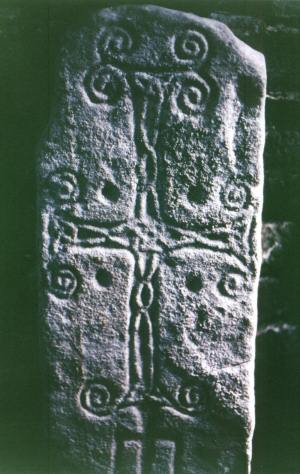
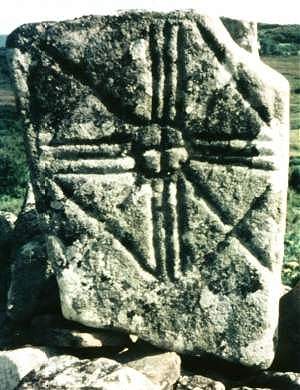
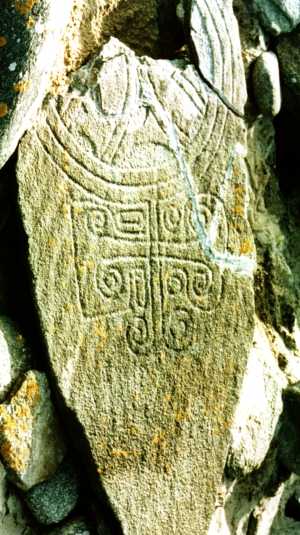
The same combination of rectilinear with curvilinear design occurs on grave-slabs. One such, carved on both sides is one of a few known to have crossed and re-crossed the Atlantic as talismans to help the afflicted descendants of emigrants from the area.
Bruckless, county Donegal: two sides of the same slab.
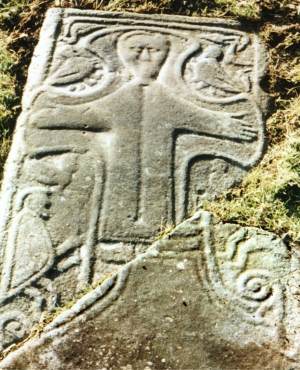
Slabs and pillars seem to merge on certain sites - which, like most of those illustrated here, are either on islands or near to the sea. On the island of Inishkea North, large cross-slabs (unlikely to be funerary) become crucifixion-slabs.
Inishkea North, county Mayo:
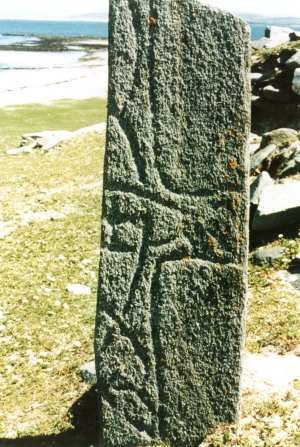
On other coastal sites the development is less deft.
Tullaghora, county Antrim
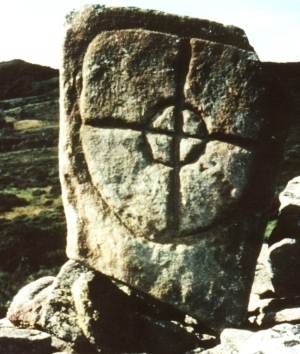
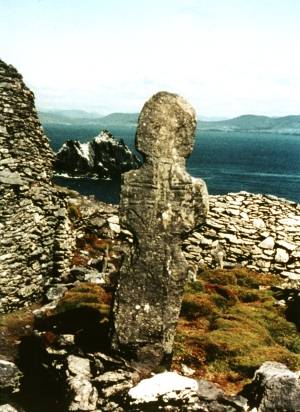
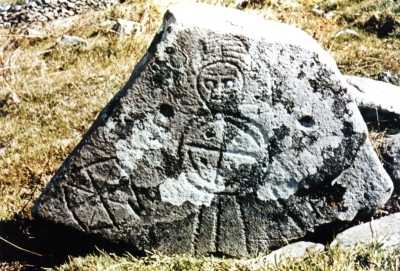
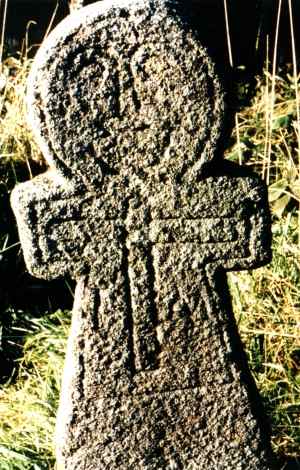
Skellig Michael, county Kerry Another development was the "face-cross", on much smaller slabs or very small pillars.
Knappaghmanagh, county Mayo:
A little pillar in a still-used ancient graveyard might be a "face-cross" - or it might be the gravestone of a 19th century child: ancient and modern are sometimes indistinguishable.
Kilbroney, county Down.
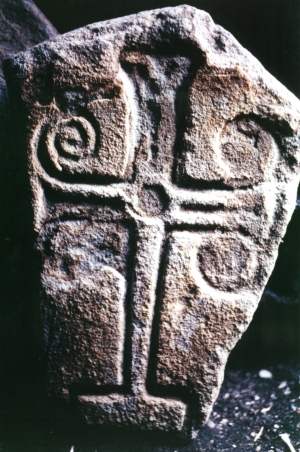
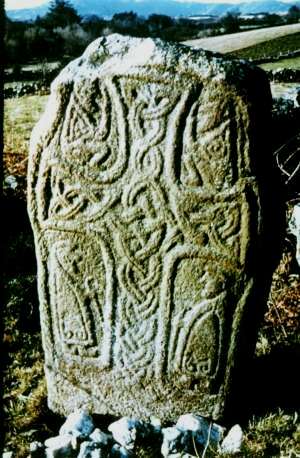
It is in the north-west county of Donegal that pillars, slabs and crucifixions merge together, and associate with motifs drawn both from pre-Christian Ireland and Merovingian France.
Inishkeel, county Donegal
Drumhallagh, county Donegal:
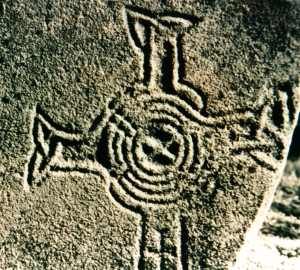
Knots and circular motifs of various kinds become a common feature on the sculptured crosses of the following centuries - along with
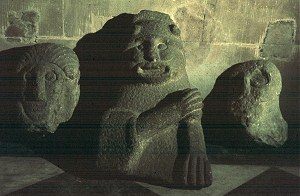
enigmatic human figures
, as well as Biblical scenes such as The Fall, Cain and Abel, King David playing his harp, Daniel in the Lions' Den, the Baptism of Jesus, and the Last Supper.
Cross-pillar, Carndonagh, county Donegal
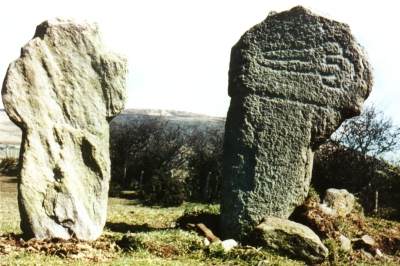
Cross and "guard-pillars", Carndonagh, county Donegal;
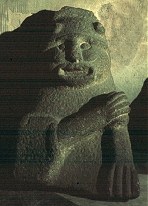
"Guard-pillar" of the cross at Carndonagh, county Donegal:
photos and text anti-copyright by Anthony Weir
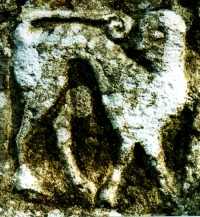
Manticora on the side of a cross-pillar (or cross-shaft)
|





 top of page
|
|
|
|
visit a website on Irish "High Crosses"
>>
