French Genius
Home =|= Free Book =|= Reviews =|= Feedback =|= About Us


POETRY

page of the month

rejoice in the dog

post-millennium maggot

dispatches from the war against the world


albanian poems

french poems

the hells going on

suicide for non-beginners

fearful symmetry

book disease

the transcendental hotel

cinema of the blind

lament of the earth mother

uranian poems

haiku by okami

haiku on the edge

black hole of your heart

jung's motel

from Belgrade: trying to get it right

vasko popa


BETWEEN POETRY AND PROSE

maxims

nice men


PROSE

houses for the dead

kamikaze and crusade


womb of half-fogged mirrors

overcoming tourism

anti-fairy tales

this sorry scheme of things

satan in the groin
part
2


irish genius

irish prehistoric tombs


french megaliths

egregious.org


Search this site by typing in a place-name or a subject:


"...and all but Lust will turn to dust in Humanity's Machine."
- Oscar Wilde: The Ballad of Reading Gaol


SATAN IN THE GROIN


male exhibitionist carvings
on mediæval churches

_________


This page will take longer to download than others on this site
- but your short wait will be richly rewarded.


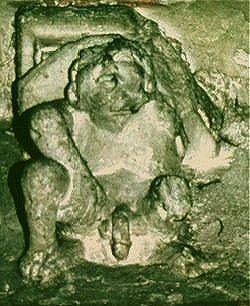
Interior corbel, church of Sainte-Radegonde, Poitiers (Vienne), France


In 12th century Europe
the two most dangerous and pernicious sins
were considered by the pious to be WEALTH (Avaritia) and the SPENDING of wealth
on goods, services and sensuality (Luxuria) .
These were the two most tangible manifestations
of the overriding sin of VAIN-GLORY (Vanitas).


Nine hundred years later,
these most insidious sins, so widely condemned
by both offical and heterodox Christianity,
have ousted every god and virtue to become
the two pillars of Capitalism,
the thronged portal of Mammon's
New Jerusalem Mall.


The Wealthy Man clutching and weighed down by his moneybag on the right-hand side of the church-doorway at Jazeneuil (Vienne), France.


The twelfth century was the most prodigious period of building in human history, with tens of thousands of churches built (in the style called Romanesque) across the length and breadth of Europe from Norway to Sicily, and Ireland to Hungary and Dalmatia. Tens of thousands of trees were felled to provide scaffolding and structural timbers.

Skilled sculptors and masons could move from a contract on the shores of the Mediterranean to another on the shores of the Baltic within a fortnight, bringing new motifs and improved techniques with them.

This energy reflected, and further contributed to, an economic boom that led to the rise of cities, the export of criminals on Crusades, and the decline of the monasteries which had generated wealth by their greatly-increased land-cultivation and output.


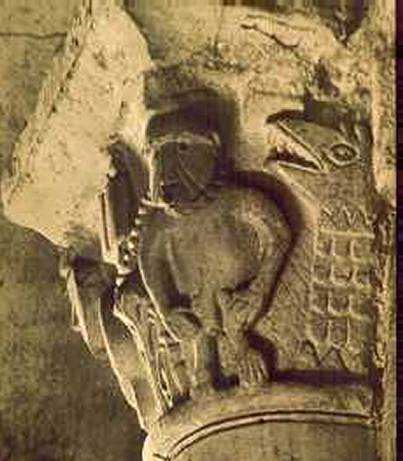
Interior corbel, Poitiers Cathedral, France


Many of these churches presented to illiterate parishioners 'sermons in stone' through carved glimpses of Heaven and Hell on their doorways, and images of sin (and, occasionally, virtue) on the stone corbel tables which supported their rooves.


Saint-Contest (Calvados), France


Some very important churches (for example, on the Pilgrim Roads across Europe and the Pyrenees to Santiago de Compostela, which were tramped by millions of feet and hooves every year) had whole façades wonderfully carved with apocalyptic and heavenly scenes designed to instruct the pilgrim.


Tuscania (Viterbo), Italy


Some collegiate churches attached to important monasteries featured hundreds of figures illustrating and warning against all sorts of sin from gluttony and drunkenness, dancing and lewd behaviour to calumny, simony and sodomy.


Béceleuf (Deux-Sèvres), France

Guzzlers of wine from barrels, acrobats and musicians (for in the 12th century no instrumental music could be 'sacred') rub shoulders with beasts such as pigs and dogs and bears who, even when not ithyphallic, represent lusts and degradation.


Annaghdown (Galway), Ireland

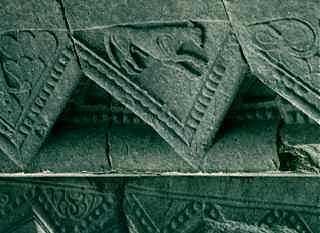
Mauriac (Cantal), France: absidiole corbels
and detail of a sinful variant of the Ourobolos


Apes, coming from Barbary, represented the barbaric and blaspheming (if not demonic) Moors, and, to emphasise the point, displayed their circumcisions.


Droiturier (Allier), France


As well as fabulous beasts, beard-pullers, foliage-spewers, mouth-pullers , tongue-stickers and column-swallowers are also well-known from hundreds of churches.
T
he megaphallic cake-eater is, however, a rare motif.

Champagnolles (Charente-Maritime), France

Absidal corbel, Graimbouville (Seine-Maritime), France


Megaphallic glutton, Barahona (Segovia), Spain


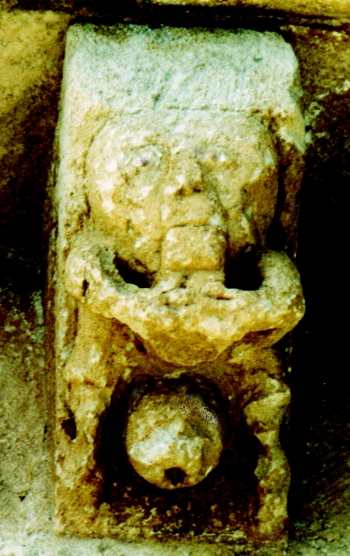
Even some remote and rustic churches feature remarkable figures in frozen demonstration of mortal sins - especially the sins of carnality, wealth and consumption - to be avoided on pain of eternal punishment.


Saint-Contest (Calvados), France


Click here to
go on to


part 2


This web-page is dedicated to the late Martha Weir,
who was amazed but unfazed by these carvings,
and without whom "Images of Lust" and " The Silent Orgy "
would never have been researched or written.


home


Click here for a related essay:

POTENCY AND SIN : IRELAND AND THE
PHALLIC CONTINUUM


search this site
e.g. by typing a place-name or subject