=
=
 =
=
 =
=
 =
=

click here to visit
Shpirti i Shqiperisë

ALBANIAN POEMS OF DISSIDENCE
by
Mirash Ivanaj
and
Trifon Xhagjika
1.
|
TWO POEMS
by
translated by Zana Toskaj and Anthony Weir
THE POET’S CRY FROM THE PRISON HE DIED IN
Farewell O life, farewell O world!
(1953)
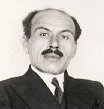
Mirash Ivanaj (born in 1891) was one of two highly-talented brothers who both were members of King Zog's pre-war government. Mirash was for two years the Albanian Minister of Education before being exiled with Zog when Italy annexed Albania in 1938. He was responsible for terminating future dictator Enver Hoxha's scholarship in France - a common enough action in the days when Zog locked up, exiled or assassinated his opponents.
At the early age of seventeen he was writing almost as bitterly.
SONG FOR FINALITY
Poison ivy marches from my grave
Withered grass the colour of death
(1908)
KENGË PËR TE FUNDMIN
Dikur do kalbet drur'i kryqit tim
__________________
|
2.
|
TRIFON XHAGJIKA
(1932-1963)
translated by Zana Toskaj and Anthony Weir
I can't,
I saw my fatherland
Help me to be happy.
(1963)
Trifon Xhagjika
(pronounced 'Dzajika')
came from 'humble origins' in the village of Zagoria near Gjirokastër. Under the communist régime he was able to get to university in Tirana, and went on from there to an administrative job in the army. He was arrested in 1963 together with members of a youth group and was executed by firing-squad. Although poetry was his passion, very little of his work was published, and much has been lost. Some were published in 1994 under the title
ATDHEU ESHTË LAKURIQ
(My Fatherland is Naked). Here is the Albanian version of the title-poem:
E mora për dore
______________
|
click here for a non-dissident Albanian poem
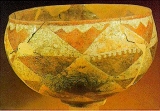
Click on this image to go to
an Albanian archæological web-site


A water-colour of Gjirokastër by an early English traveller in Albania
- Edward Lear.
|
FROM
TWO VAGABONDS IN ALBANIA
by JAN AND CORA GORDON (London, 1927)
- a rare gem of a book.
« Even its warmest admirers would not claim that the Government of Albania is as yet an admirable model. Here is at once a republic and an autocracy: in a condition similar to the smaller South American republics of romantic memory. The condition is not, in truth, blamable to Government alone. Albania is now some five or six years old. Before the inception of this self-governing republic the peasants lived almost untaxed and almost free from military service. Set a chilf of six years old to be its own parents, guardians, and schoolmaster and you would hardly expect success. The foundation of proper government is money, or work in lieu of money. But the peasants and merchants have the strongest objections to paying adequate taxes, and are quite ready to revolt in order to find a Government that will run the country without taxes. Government officials, from highest to lowest, aware of the risky tenure of their posts, are tempted to make their places a means of immediate profit, garnering against the future disaster when they will have to flee the country. It is difficult, morevover, to blame much to a country that has not learned the word Nationality from its cradle, and which has no notion of what 'Public Service' can imply. It is difficult to blame it for its first tottering attempts in the art of self-government. The people are also divided into four religions, all of whom despise each other - Orthodox Mohammedans, Bek-ta-shees , Greek Church, and Catholics. « The present dictator, Ahmed Zogu [who became King Zog] chief of the Mati tribe, is admitted by most to be a patriotic, hard-working and sincere man, but his hands are tied, and he is controlled by the members of his suite, his ministers, and deputies. Whatever reforms he may believe to be possible, he has no instrument with which to carry them out. The Christians, who are his most eager enemies, and who are most clamorous for the development of the country, have made that development impossibler, since a general political peace is the only condition under which the dictator could substitute for the many venial amongs his supporters more honest though less powerful partisans. How is it possible to build up an efficient public service when not one believes in the permanency of the State ? « In this welter of bribery, office-seeking and corruption a little group of English ex-army officers has been engaged as advisers to the police. They have no real power whatever, but popularly in Albania they are thought to be almost all-powerful. They are naturally hated by a large group of ministers and deputies, who see in them an obstacle to their own political and selfish projects and who will do anything to prevent, for their own ends, the propagation of any reforms for which these Englishmen are struggling and which the President himself may really desire. »
|