|=
|=
 |=
|=
 =|
=|
 |=
|=




the most terrible doctrine is the doctrine of
normality
|
SHOPLIFTING in BRITAIN and AMERICA
There is sometimes a queue of other shoplifters at this busy 'alternative till'. Sometimes, they will ask you to pay 10% more than their value - to cover the costs of hiring security-staff, or as a little bonus to the diligent shop-assistant. They sell their goods. In France, Italy etc. shoplifting is regarded as a technical offence (like exceeding a speed-limit), committed by students, the poor, the powerless and depressed - whereas in the more punitive anglophone countries it is regarded as a moral crime against society.
Because of this, in anglophone countries the pilferer/thief will be watched, and allowed to leave the store. Then they will apprehend her or him dramatically, frog-march him or her back into the store - and call the police. In many stores there are dummy cameras to fool shoplifters. There are also hidden cameras in different locations designed to entrap shoplifters. This is, of course, illegal. Security firms are hired on their reputation for catching shoplifters, not for preventing shoplifting (which is incalculable). Entrapment helps to improve the statistics in a competitive market.
They do not attempt to sell the items to you (thus losing revenue).
They actually entrap the 'criminal' and ensure that a crime that has been committed, so that they can call the police, a most expensive service for which they pay nothing. (This is the same mentality which challenged Saddam Hussain to a war in which he had nothing to lose by burning Baghdadi and Basrahi citizens alive, nerve-gassing the Kurds, etc., so that the United States and the United Kingdom could justify their invasion.)
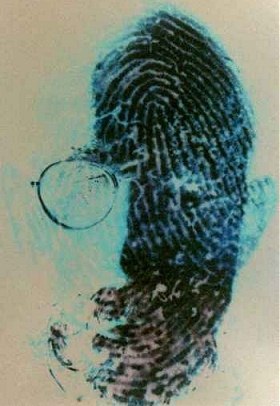
The pilferer is kept in a store-room until the police arrive (which may take a hour or two), he or she is then arrested, cautioned, taken to a police-station, cautioned again, searched, put into a cell to wait, then, after half an hour or an hour, interviewed by detectives (!),fingerprinted, photographed and has a DNA swab taken from his or her mouth.
A solicitor (attorney, advocate) may of course be requested by the criminal. But if he or she, caught in flagrante, 'admits guilt', this is hardly necessary. The process and procedure take an hour or two, the thief is given back the property that was taken off him on arrival at the police-station, and is given a piece of paper instructing him or her to attend a Court hearing on a certain date. Or the criminal is kept in the police cell overnight and brought to Court the next day to be sentenced: to pay a fine or go to prison.
All this costs a great deal of money. The shop does not sell its goods.
No wonder that the United Kingdom has the highest per-capital prison population in Europe: higher even than Burma/Myanmar or Singapore.
The compulsive shoplifter goes through this procedure every time he or she is seen to steal - whether it is a tin of beans, a book, or a box of candles.
I started as a teenager, stealing books: Dostoyevsky, Kafka, Steinbeck, Zola, Camus, Salinger, McCullers, O'Connor, Dante, Homer and Proust. I then graduated to vinyl records, and, living 'below the bread-line' after I left home, to food, household equipment and the occasional objet d'art.
In Britain, shoplifters are regarded with comfortable outrage.
When flights to Italy leave British airports, police are drafted in to arrest Italians who have stolen small items from the very-inviting airport shops - who are then very surprised to miss their flight, spend the night in a police cell, and receive a hefty fine in court the next day.
The Italians and the French, however, recognise that shoplifting is the silliest and highest-risk of all 'crimes'. That it is, in fact, a pseudo-crime.
Neither the police (of course), nor the judiciary, nor the legal profession have raised their voices to prevent the ridiculous waste of money involved in prosecuting people (usually women) who pilfer underwear, food, or marker-pens. If shops insist on doing everything to make their goods tempting, they should do their own dirty work. They happily make a profit of up to 1000% on what they sell - partly, I suppose, to cover the huge costs of CCTV cameras and the staff to operate and maintain them. Britain with its notorious voyeuristic culture is completely besotted by Closed-circuit Television systems. Whole towns are under minute supervision, and many open roads, too.
While Anglophones love to have criminals to fear and punish, they are amazingly indulgent towards big-time criminals such as Stock-market insider-fraud, tax-evaders, and other 'white-collar' criminals who defraud not only the state but pension funds as well. These are high-status macho criminals. Shoplifting is a female crime of low status - and, of course, the lower the status of the crime the more severe the relative punishment. Fiddling expenses, on the other hand, is almost never prosecuted. It is, more even than 'crimes against humanity', the most common crime of executive Heads of State.
Shoplifters Alternative
tells us that now, at last, shoplifting is being looked at as yet another
Process Addiction
over which some people could be powerless. (A Process Addiction is a compulsive behaviour in which a person becomes dependent on the whole behavioural process for a result, rather than on a chemical. Gambling, sex, collecting things and ambition are just four obvious, different and much-encouraged examples of process addictions.)
Shoplifters Alternative defines two categories of shoplifters: professional and non-professional. A professional shoplifter steals to resell merchandise (usually for a fraction of its retail value), perhaps in order to satisfy other addictive behaviour such as drug-taking. Although there are gangs of professionals who steal very expensive items, most professionals are poor. The non-professional shoplifter is someone who obtains some emotional satisfaction from the process of stealing successfully. This individual is not stealing just for monetary or material gain but (also) to medicate a feeling of injustice or an internal conflict. Reasons for non-professional shoplifting include the attempt to overcome unresolved issues toward an authority figure; a sense of social injustice; a sense of entitlement to overpriced goods (or due to the aggressive environment of the shop); the relief of stress through the adrenaline rush associated with the process of stealing; the abatement of emotional discomfort linked to feelings of depression, anxiety, anger, grief, powerlessness or boredom.
In an article titled "Shoplifting Can Be Addictive" by Shoplifters Alternative , the authors claim to describe the process that occurs as the shoplifter enters a store until he or she leaves. This alleged dynamic "involves a concurrent continuum of tension and excitement as the shoplifter contrives to conceal an item and eventually or quickly leave the store with it. Tension builds as the shoplifter encounters potential threats to the process and a sensation of excitement each time a possible threat, such as a salesperson or hidden camera, is overcome. The ultimate "high" occurs when the shoplifter's tension turns into excitement as he or she successfully leaves the store without being caught. This "high" temporarily relieves the emotional dilemma, whether positive or negative, that precipitated the theft process." This jargon-filled analysis has been dreamed up by someone who has never shoplifted. The whole process is stressful, and leaving the shop without being apprehended does not produce much of a "high". To complicate the complex, a Shoplifters Alternative survey found that 80% of shoplifters said that they didn't even think about getting caught. In another piece of tergid jargon, they say that published reports suggest that there are no specific demographics that delineate the profile of the 'typical' shoplifter from others. However, it has been found that adults steal more than teenagers (only a small proportion of offenders caught are under 18), and that one third of those caught find it difficult not to re-offend. Shoplifters Alternative considers shoplifting to be distinct from kleptomania - because 'the stealing-behaviour' of a kleptomaniac is impulsive rather than due to a compulsive psychological/physiological need. Kleptomania is also not premeditative.
Shoplifters tend, of course, to regard their (often infrequent) activity as a victimless crime, no matter what background they have. After the first occasion, many people quickly become addicted to the little satisfaction of stealing something and getting away with it. Some, indeed, may not plan to steal when they first go into a mall or hypermarket or store, but they can't help it once they're inside. This suggests that there is, after all, no difference between addictive shoplifting and kleptomania. O ther websites remark that soon as a new anti-shoplifting measure is introduced - whether directed against theft by staff (more than 50% of the loss-value of all store-theft) or by potential customers - people find some way to beat it. Stores, needless to say, spend millions of dollars trying to stop shoplifters: a bit like trying to catch water in a sieve. The cost of prevention and of shrinkage are passed on in the retail price.
"Experts" say that the most popular stores affected by shoplifters are grocery stores.
The picture below is criminal in Britain, because one of the photographs involved in this picture was taken in a slaughterhouse. It is criminal even to take photographs inside a meat-market. It is a crime to piss against a wall.
The same viciousness is apparent in America, where it is also a crime to take photographs in slaughterhouses.
What a sense of satisfaction I had when I gave away my British Passport.
I am a pseudo-criminal in a criminal state. |



>>>
living in Northern Ireland
>>>